
NSDD-166, The Soviet-Afghan War and the Genesis of Salafi Jihadism
If Christianity was the shield drawn against Communism during the Cold War, then Islam was the sword. Pivoting from a domestic strategy of Protestant revival, the covert operationalization of fundamentalist Islamic ideology proved to be highly effective in the struggle against the Soviet occupation of Afghanistan during the late 1980s, turning the tide of the asymmetrical engagement and ultimately contributing to ensuing political and economic crisis in Moscow. This tactically successful facet of the Reagan doctrine was made possible by the authorization National Security Directive Decision 166 (NSDD-166) in the Spring of 1985, by bolstering the flow of financial and material aid to the Afghan Mujahideen resistance and revolutionizing the ideological foundations of the movement. Additionally, the overwhelmingly effective management of international connections throughout the “Islamic world” and the subsequent spread of consensus pertaining to the role of the Islamist Mujahideen brought significant strength to the resistance, melding the geopolitical concerns of the Afghan peoples with the religious discontent of young Muslim men throughout the Arab world. It was primarily the authorization of NSDD-166 by the Reagan administration that catalyzed these conditions, crafting the elementary framework for the process by which CIA operations in the Middle East mobilized a global ummah, expanded and transformed the Islamic tradition of jihad and ultimately cultivating an ideological movement that grew beyond the control of any governmental entity.
The ultimate goal of direct U.S. involvement in the Soviet-Afghan War, as outlined by NSDD-166, was “the removal of Soviet force from Afghanistan and the restoration of its independent status” (The White House 1). The U.S. interpreted the Soviet Union’s initial invasion of Afghanistan in the December of 1979 as an indication of further expansionist ambition—an attempt to destabilize South Central Asia and the greater Persian Gulf—constituting a breach of norms between the two superpowers. Just months after the Soviet’s offensive, the Carter administration began to lay the groundwork for new initiatives aimed at entrapping the Soviet Union in its own “Vietnamese quagmire” set in the treacherous valleys of Afghanistan (Gates 145). Over the course of the next ten years, the intensity of U.S. involvement grew, with gradual amendment to Carter’s initial presidential finding allowing both the supply of lethal provisions to the Mujahideen and an increase CIA operational spending.
However, no substantial progress was made in the face of Soviet occupation until the implementation of “roll back” initiatives delineated by the Reagan doctrine. The authorization of NSDD-166 was a major landmark in the effectuation of the policies strategic priorities, transitioning the CIA to a more overt posture of direct and multidimensional involvement, cultivating ideological and religious sympathies in conjunction with the expansion of previous armament programs. While the directive outlines a number of general priorities and sub-priorities, the last interim objective of NSDD-166 is left exceptionally vague, stating that the U.S., “Where possible…” must aspire to “…encourage greater political coordination among the Afghan resistance group”. However, document acknowledges that “While it is unrealistic to expect a unified resistance movement which will champion the resistance cause internationally, agreement among the various Mujahidin parties to establish structures which can speak for the resistance internationally will add to the pressure on the Soviets and increase the political and diplomatic effectiveness of the resistance” (The White House 3). While not particularly profound as a solitary objective, the intention of this initiative constructed the framework for the operationalization of the Islamic concept of jihad and the resulting reverberations in the greater ummat al-Islām (the Islamic community).
The importance of spiritual and cultural ummah (community) in the Islamic faith is alluded to by the third major policy goal of the document. Aspiring to “Promote Soviet isolation in the Third and Islamic worlds on the Afghanistan issue” the objective states that:
“The Soviets have paid the price in Third World for the continuing occupation of Afghanistan. We must not let their activities disappear from the agenda of Third World and Islamic countries. We should make every effort to increase the condemnation of the Soviets on this issue” (The White House 1-2).
This priority assumes an inherent commonality of interest throughout the “Islamic world” and appears to be shortsighted in identifying the potential challenges in mobilizing a collective ideological resistance. Most Muslim majority nations in the post-Colonial period were primarily concerned with the reconciliation of regional difference as opposed to addressing the Communist threat from the North. In fact, a considerable number enjoyed the support of security operations and the comfort of economic interaction with the Soviet Union. Although within traditional Quranic exegesis, ummah applies generally to the global Muslim community as a whole, this understanding evolved from definition found in earlier Meccan portions of the Qur’an where ummah is presented as a compartmentalized ethnoreligious notion of regional faith community (Watt). This clefted interpretation of the Islamic collective was certainly evident in the political fabric of the Middle East in the late 20th century. While attempting to effectuate the core policy objectives of prioritizing the Soviet threat for Muslim Nations and bolstering a “unified resistance movement” that would “champion the resistance cause internationally” (The White House 3), the U.S. recognized the need for a mechanism by which it could promote both interstate and intrastate unity among the fragmentation—and so was conceived the concept of a global jihad.
The particular manner in which these operations unfolded provides an exemplary case study of the way in which the infusion of religious beliefs in a targeted political movement can lead to long-term alterations to foundational elements of said faith. U.S. intervention in Afghanistan marked a significant departure from the historically secular trends in the Middle East during the 20th century. Author Pervez Hoodbhoy of Quaid-e-Azam University asserts that “The real breakthrough came when the Afghan jihad pitted Sunnis against communist infidels and gained full support from the world’s most powerful nation, the United States. Its superb organizational skills, massive human and technical resources, and single-minded dedication to anti-communism enabled it to create potent and unified Islamic entities”, expressing a position shared by most historians versed in the time period (29). This development signaled a profound departure from the political norms of a post-Caliphate Middle East. Barak Mendelsohn, author of Combating Jihadism: American Hegemony and International Cooperation in the War on Terrorism, claims that traditionally “when the concept of jihad was invoked, it was restricted to a narrow context within specific countries and their populations” aiming to undermine the sovereignty of individual states (37). This specific politicization of religious fundamentalism, implemented by CIA throughout the 1980s, prompted the transformation of jihad from a regional phenomenon to a global movement. Working with Pakistani Inter-Services Intelligence Agency (ISI), Special Activities Division/Special Operations Group (SAD/SOG) operators from the CIA began distributed pamphlet literature and school books promoting radical fundamentalism, expanding these operations throughout madrassas (religious schools) in Afghanistan, Pakistan and into the neighboring Soviet territory of Uzbekistan (Coll). However, these activities were only the tip of the iceberg for the ISI/CIA partnership, which understood the ideologically dynamic nature of relations between the Afghan Mujahideen factions. In light of newfound tactical success in the usage of anti-aircraft weapons systems, the CIA and ISI dedicated increased energy to the maturation of international connections between Islamic fundamentalist organizations throughout the Arab world.
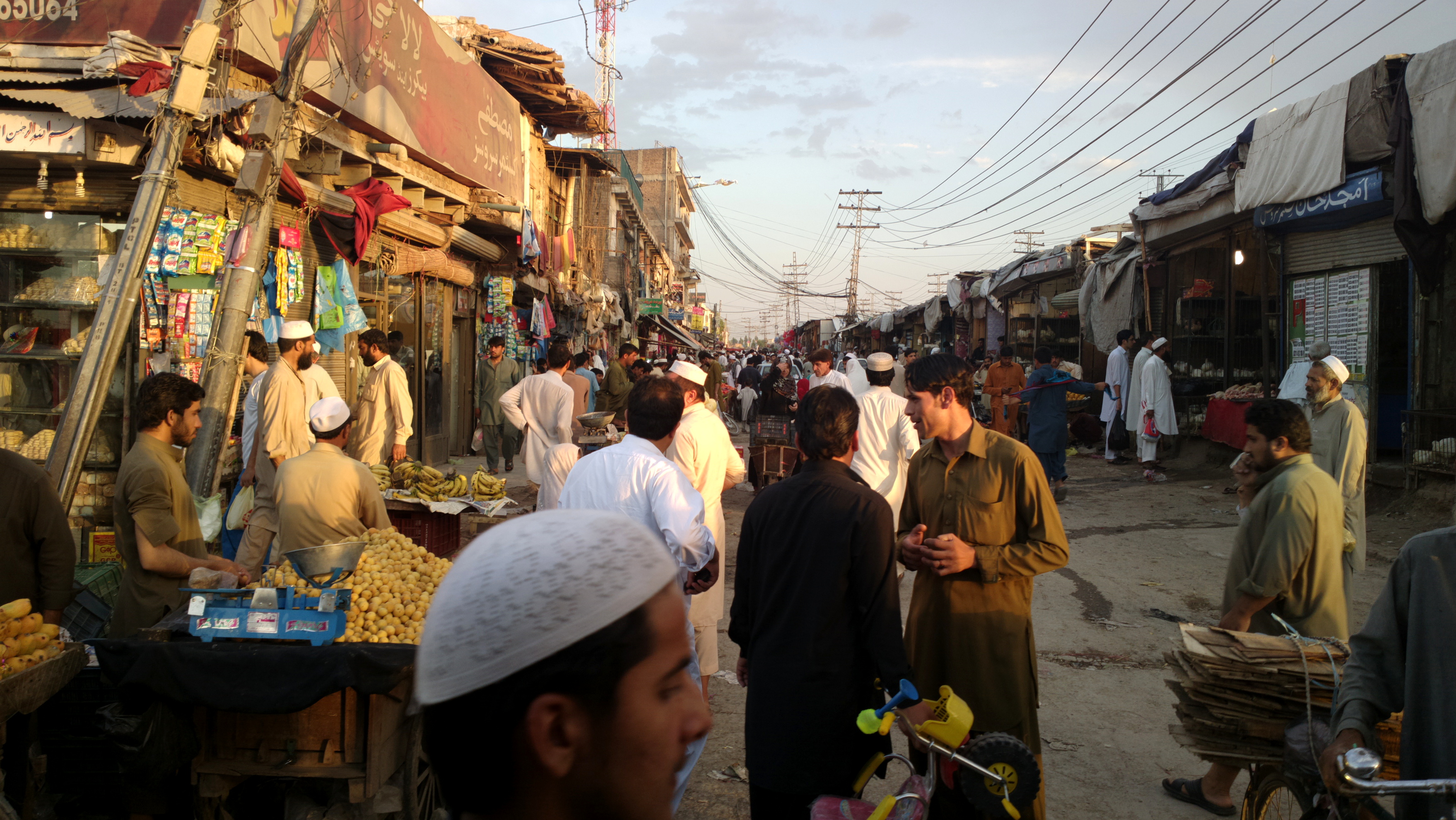
Most movements called upon by extensions of the CIA and ISI had backgrounds in regional jihad, with groups such as the Muslim Brotherhood and Wahabi pursuing a reversion to Islamic conservatism, on a country by country basis, throughout the Levant and Greater Maghreb. Sunnis from Algeria to Turkey, frustrated with increasingly secular bureaucracy and Soviet-backed Iranian derision, itched for an ideologically sound outlet for discontent. Prominent Palestinian Sheikh, Abdullah Azzam, presented such an opportunity and bluntly summarized the U.S. message, famously declaring “incumbent upon every Muslim today, capable of carrying a weapon, to march forward to jihad to aid their Muslim brothers in Afghanistan” (Azzam). This call to action was particularly effective in the face of a Communist-atheist adversary, in lieu of any political element, as atheism as a religion and philosophy necessarily denies God (or a God). In Islam, this rejection of the Divine—specifically the tawhid (oneness) of Allah—is known as shirk (an unforgivable sin of the highest magnitude). This angle did much to prepare conditions for the implementation of the fourth major policy objective of NSDD-166, a call for the expanded perception that “The Soviet Union is an imperialist power which will subjugate Third World states militarily when it suits its interest to so” (2). CIA/ISI messaging strategy effectively incorporated the contempt felt for respective national governance, religious infighting and the presence of God-rejecting foreign influence to create a powerful recruitment mechanism. Foreign Mujahideen—dubbed “Arab-Afghans” (though not all were Arab and none were Afghan)—arrived in droves as result, with an estimated 10,000 to 35,000 combatants filtering through Pakistan and Afghanistan throughout the remainder of the decade (Donnelly et al. 4). The majority of these combatants were processed through the CIA funded, ISI run training camps and staging grounds in Peshawar, Pakistan, a city that functioned as the breeding ground for “unexpected ideological cross-fertilizations” (Kepel and Roberts 137) between fundamentalist groups. Mendelsohn follows his original identification of regional jihad by claiming that these specific structures of mobilization were those that “led to the revival of the notion of jihad as a collective duty…” and that “…for many of the volunteers who came to central Asia to wage or support the military effort, it instilled the belief that jihad was the solution to the ummah’s weakness and the key to returning it to its glory days”, a development that ultimately impelled the conception of global Salafi jihadism (38).
To this day, the violent and reactionary ideology of Salafi jihadism pervades Islamic fundamentalist movements globally. The dogma realized in the melting pot of Peshawar created a mold for the majority of modern extremist organizations—Al-Qaeda, the Islamic State of Iraq and the Levant (ISIS), and Jabhat al-Nusrah (al-Nusrsah Front) forming as some of the most dominant in recent years. Yet some academics, such as Adam Stahl of the International Institute for Counter-Terrorism, assert that the role of U.S. influence in the evolution of this specific ideological sect is overstated and that “Arab militants involved in the Soviet-Afghan War ‘functioned independently and had their own sources of funding’.” and received “ …vast amounts of capital from numerous foreign Arab Muslim sponsors” (Stahl). While it is true that CIA payments “amounted to no more than 25 percent” of the total budget of the Arab Afghan resistance, this argument ignores the core objectives and realities of U.S. participation, both indirect and direct (Mendelsohn 39). The CIA wholly collaborated with the Pakistani ISI for the duration of the Soviet-Afghan War and any action in Pakistan at the time was likely a result of U.S. influence. In attempting to internationally “increase the political and diplomatic effectiveness of the resistance”, it was imperative to develop an effective forcing function for common political sympathies (The White House 3). Without funding for the Peshawar training camps or without the deliberate and targeted spread of visceral motive throughout the greater ummah, it is difficult to imagine the global jihad movement operating as effectively and resiliently as it has been for the past 30 years.
The emergence of this Salafi jihadism was an inevitable outgrowth of the conditions set by U.S. actions outlined in NSDD-166. This phenomenon emphasizes the malleable condition of religious belief, which is constantly evolving and highly subject to dynamic changes in regional culture, politics, society. Campaigns such as those discussed in this paper further exacerbate this nature, demonstrating the ways in which a coordinated and intentional adjustment of core concepts within a certain faith—in pursuit of specific political objectives—can lead to enduring reformations that meld political ideology with foundational religious beliefs. Through its deceivingly vague and plain-worded policy objectives, NSDD-166 and its lasting impact demonstrate that interaction between religious belief and political activity is a two-way street that is rarely traveled without encountering unintended consequence.
Sources
Dr. Abdullah Azzam, “Defense of the Muslim Lands,” 1993 accessed March 1, 2017, https://archive.org/stream/Defense_of_the_Muslim_Lands/Defense_of_the_Muslim_Lands_djvu.txt.
Coll, Steve “Anatomy of a Victory: CIA’s Covert Afghan War” Washington Post, July 19, 1992
Commins, David (2006). The Wahhabi Mission and Saudi Arabia. London: I.B.Tauris & Co Ltd. p. 174.
Davis, Craig. “‘A’ Is for Allah, ‘J’ Is for Jihad.” World Policy Journal, vol. 19, no. 1, 2002, pp. 90–94. JSTOR, JSTOR, http://www.jstor.org/stable/40209794.
Donnelly, Maria Galperin, et al. “Foreign Fighters in History.” Foreign Fighter Project, Center for Strategic & International Studies, foreignfighters.csis.org/history/case-studies.html.
Gates, Robert (2007). From the Shadows: The Ultimate Insider’s Story of Five Presidents and How They Won the Cold War. Simon & Schuster. pp. 142, 144–145.
Hoodbhoy, Pervez. “Afghanistan and the Genesis of Global Jihad.” Peace Research, vol. 37, no. 1, 1 May 2005, pp. 15–30. JSTOR, JSTOR, http://www.jstor.org/stable/24469676.
Kepel, Gilles, and Roberts, F. Anthony Jihad: The Trail of Political Islam. Tauris, 2014. Pp. 137
Parenti, Christian. “America’s Jihad: A History of Origins.” Social Justice, vol. 28, no. 3 (85), 2001, pp. 31–38. JSTOR, JSTOR, http://www.jstor.org/stable/29768089.
Stahl, Adam. “ Al-Qa’Ida’s American Connection.” Global Politics, no. 6, 21 Nov. 2011.
The White House. National Security Directive Decision Number 166. 27 March 1985: Washington, D.C: Federation of American Scientists, 2010. Intelligence Resource Program. Web. 30 November 2018
Watt, W. Montgomery (1972). Muhammad at Medina. Oxford: Clarendon Press.
“Spreading Jihad: From Local Jihads to a Global Jihad.” Combating Jihadism American Hegemony and Interstate Cooperation in the War on Terrorism, by Barak Mendelsohn, The Univ. of Chicago Press, 2012, pp. 37–62.
 Soapbox 360